

My Twitter activity in August 2026 should probably have me admitted to a mental hospital.


It was only in August that I decided to give Tenet a second shot. My first watch was somewhere around 2021, and I found myself profusely disappointed at what I was seeing. I couldn’t hear any dialogue (and the subtitles didn’t help), the movie seemed all over the place, and I didn’t feel a strong emotional connection to any character.


Admittedly, this might have something to do with the fact that I watched it alone in my room on a laptop screen, but we’ll skip past that.
A close friend of mine is a huge fan of Tenet. For a long while, I could never get why she loved it so much. And I am an avowed devotee of Inception, so I’m not one to shirk away from enjoying a good summer blockbuster from the mind of India’s favorite Western bro-director.
Why the rewatch? Well, Film Twitter was talking about it a lot right ahead of the release of The Odyssey. And their enjoyment didn’t seem to be all that related to Christopher Nolan’s most well-known, and often deeply annoying, self-indulgences, but rather that it was just fucking cool.
If you didn't know already, a cursory “Ctrl+F” of the average review of a Nolan movie will have some version of the word “self-indulgence” in it. If I had a penny for each instance of it being used to describe a movie made by him, I would have enough money that I would personally give Nolan to produce another self-indulgent movie. We’ll get to this subject in a bit.




Not that I don’t agree with this criticism. Shockingly, for a movie I thought I liked so much, I haven’t seen Interstellar a second time since my 9th-grade self was in awe of those magnificent wormholes. And I regard rewatchability as the most decisive factor in rating any movie. But Interstellar really does get meandering with at least 30 minutes worth of fat. Other movies of his suffer from similar tendencies.
Now, my rewatch of Tenet didn’t change too much of what I found problematic the first time. I had a much simpler time following the dialogue. Even then, that gave rise to another concern: the quality of the dialogue-writing was very inconsistent.
But it also left me with new sources of wonder. I was left with my mouth gaping at multiple scenes, saying to myself “how did they do this?”. At the start of the second half, something in my head clicked with regards to the stakes involved. I was almost emotional with Robert Pattinson’s final goodbye, which was odd considering how cold the rest of it felt. I couldn’t stop thinking about what I’d seen for weeks.
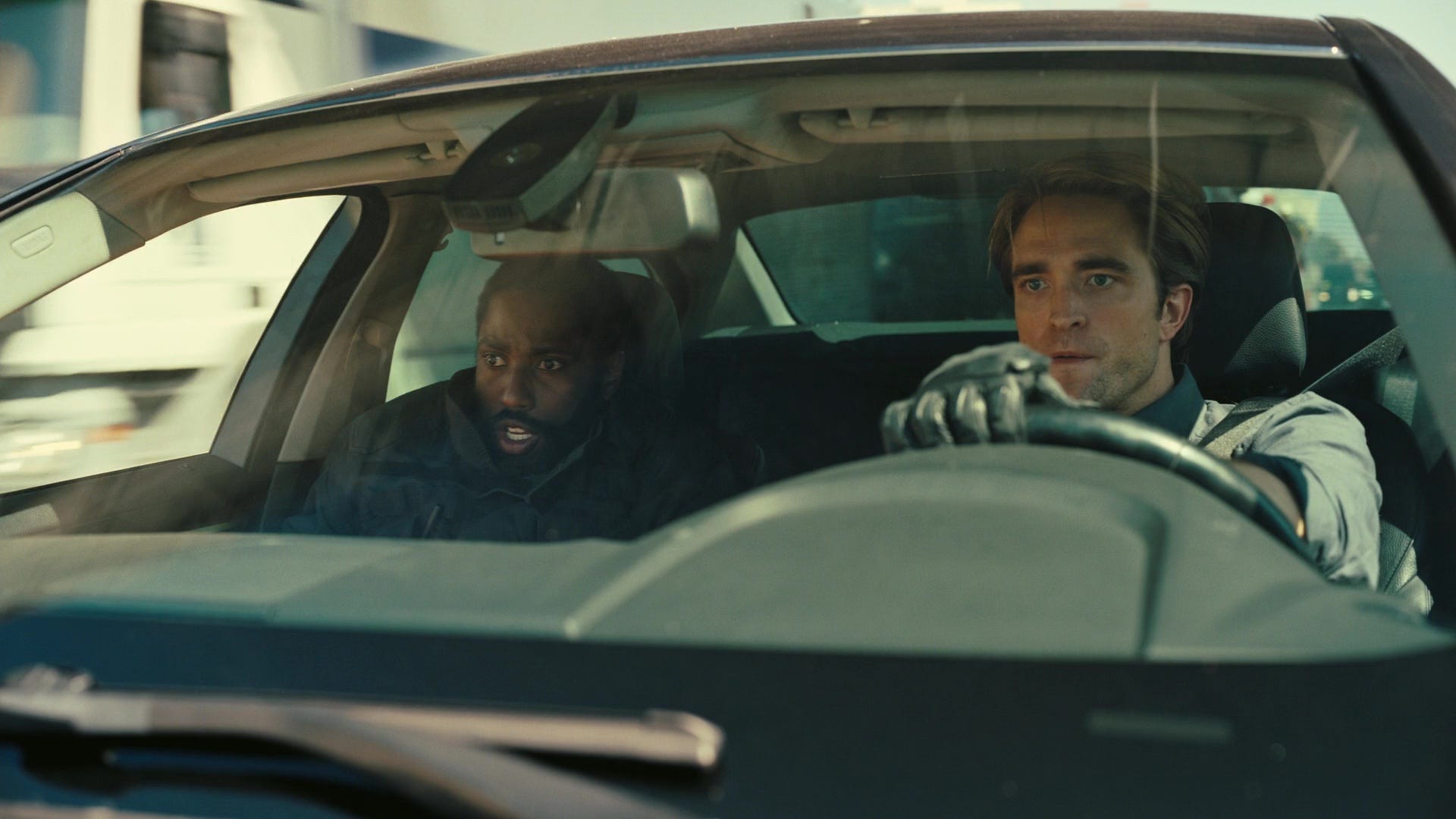
More than anything, I was impressed with Nolan’s ability to make a dazzling spy flick for once. At least with respect to only the spy parts, this felt like a cleaner, more mature version of what Inception was meant to be, even if relatively worse elsewhere.
What’s most important is that little of my Tenet obsession had to do with what anyone with even a passing interest in Christopher Nolan would know is his greatest obsession: time. One of those “self-indulgent” critiques also comes from the fact that often, Nolan’s attempt to wrap a story around wild problem statement about time-warping often leaves people hanging on the story.
Except, for a movie even as twisted as Tenet, I didn’t think that that happened.
(Note: A few minor spoilers for Tenet, many spoilers for Inception.)
Let The Dollar Circulate?
The first thing that caught my eye was what Tenet had to say about the richest, often most rent-seeking people of the world. And it was more substantial than your run-of-the-mill “eat the rich" commentary.
There’s a fantastic article by two economists, Yakov Feygin and Dominik Leusder, called “The Class Politics of the Dollar System”. It argues that one of the most important sources of dollar strength comes from the fact that rich people, no matter their country of origin, love using it. The root of this stems from the fact that they own some of the biggest firms that hatched their eggs by exporting to the US, or by exporting global commodities (like oil) that are benchmarked in the dollar, or both.
To that end, the authors also say that to view the dollar as simply something the US wields as a tool of power is inadequate, especially since the dollar’s status as the world’s backstop is also what reinforces America’s growing trade deficit with the rest of the world (especially China).
“The dollar’s present centrality does not come from the priorities of United States national security or interests. Rather, it is rooted in the preferences of private actors in the global money market that mediates between financial institutions, political and business elites, and states. Traditional views of Westphalian sovereignty are not sufficient to explain the cleavages caused by the dollar in the “matrix” of interlocking balance sheets that make up the global financialized economy. While the dollar system has undoubtedly had a disproportionately negative effect on developing countries, the main fault lines that emerge from the dollar system are along class, rather than national lines.”
I’m not erudite enough to say if national fault-lines don’t matter as much (especially because of America’s history to get up to things). But suffice it to say that the dollar has superseded its origin to world-changing effect. It is the dominant currency that a Mukesh Ambani, a Roman Abramovich, an Eduardo Saverin or even an Aliko Dangote — all of whom come from BRICS or African countries — would use for credit and invoicing. They, or the companies they own, often create and settle dollar claims with other international entities, even though they have no power to issue new base dollars to settle those claims finally. That privilege rests squarely with the US Federal Reserve.
Unlike the rest of us, this set of people would not use a simple checking account in their home country for much of their money. It doesn’t yield great returns for one. It’s also an account in the home currency which can’t easily make dollar settlements. And most importantly, no one can or will insure a deposit worth a billion dollars; above a certain cap, a bank balance is a bet on one bank. If it fails, you’d have to wait a long while before you get your dues, or worse yet, fight for the leftovers.
The rich would want their wealth to be liquid, and not just any kind of liquidity but that of the dollar. Remember, they have lots of dollar loans (and receivables) to settle. So they would want to have access to assets that, if needed, can be sold quickly for dollars that they can use for settlement. US Treasury bills are one such asset, and they’re among the safest assets in the whole wide world.
But this is not always easy. A lot of the wealth of the rich would be locked up in assets that are difficult to sell quickly at all, instead of cold hard cash. While these assets do earn them far better returns than US Treasuries would, their risk profile is significantly higher. Yes, it’s true that Elon Musk’s wealth doesn’t come from the cash he has on-hand, but from how easily he can raise credit. But ultimately, to raise credit, you need to post collateral, and a bank that takes in that collateral then has to assume the risk of not being able to convert it for Benjamins easily.
In short, dollar liquidity is everything, and it is this need for liquidity that creates a shadow banking market for dollars that sits outside of the direct purview of the domestic American banking system.
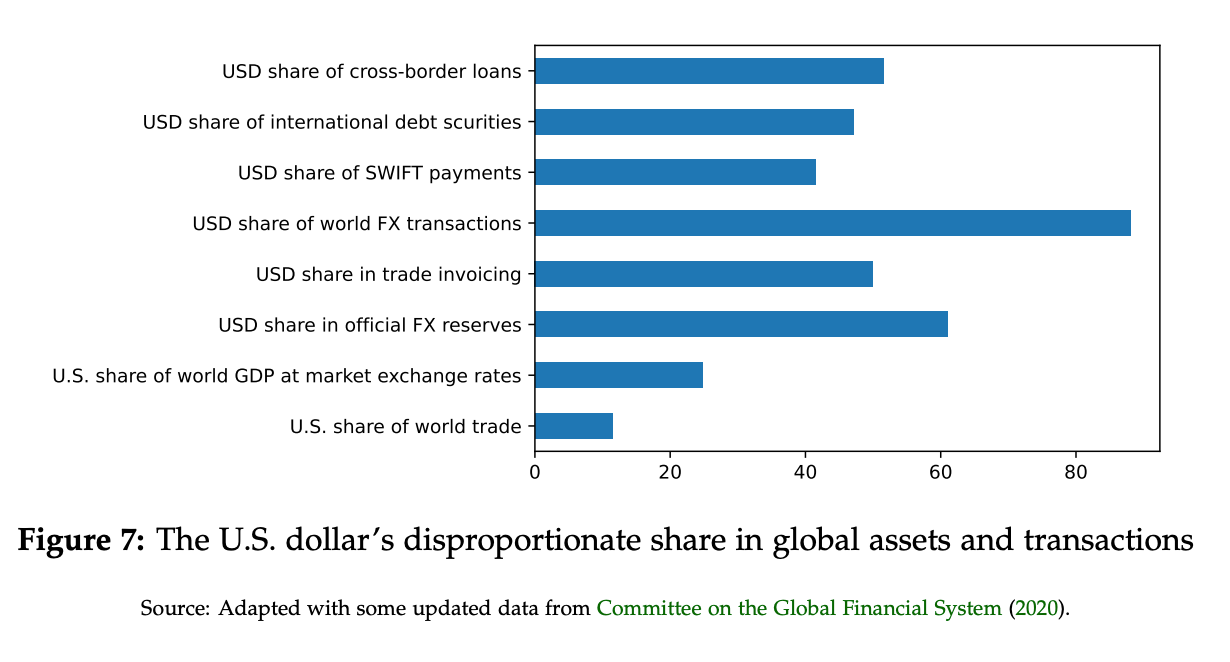
You may be familiar with some institutions of this market. Funds in the Cayman Islands, Ireland, Singapore, London. The Swiss banking system, while known in popular culture for tax evasion, has also enabled instruments that aid the dollar liquidity needs of financial elites. Private equity funds, and in a way, sovereign wealth funds, too, would raise their capital from exactly this class of people, while making investments and loans everywhere from Brazil to China. Brokers like JPMorgan or Goldman Sachs act as middlemen.
Perhaps unsurprisingly, it is from this market that you get to hear multiple stories of blatant tax evasion, like the Panama Papers. Tax evasion wasn't always the root cause of why all this infrastructure was built; that, the authors say, is dollar liquidity. But it seems that inevitably, such a shadow banking infrastructure always leads to some deviant off-balance sheet behavior.
This article was what I was most reminded of while watching Tenet, which is placed squarely at these power lines, while national borders have become far less potent.
The villain, Andrei Sator (played by Kenneth Branagh), is a nihilistic Russian billionaire who sits out of London despite having operations everywhere but there. Tenet writes Sator as a product of the messed-up liberalization of the Soviet Union, where the managerial class of the country had used their position to swoop up state assets. Tenet even directly calls the opening up of the Soviet Union ground zero for everything else in the movie. The movie shows that Sator killed someone to “stake his claim in a new Russia”.
This is not far from what went down in real life. Roman Abramovich, for instance, got rich because of the poorly-designed loans for shares scheme of Boris Yeltsin. Abramovich was also once caught to have forged documents to intercept a train that was carrying bucket loads of fuel. However, the allegation was later deemed to be a misunderstanding, and Abramovich was let go. Of course, Abramovich is also among London’s most infamous, richest residents, and the chief patron of one Chelsea Football Club.
Unlike in Poland or China or even India, where at least entrepreneurship received a boost because of liberalisation, Russians became far more grotesque in the name of profit. Hell, Russia was known to have literal murders in the aluminum industry. Journalists, USSR-era managers, metals traders, many were killed in the name of the asset-grab that had opened up. Today, in Russia, new business formation has fallen to a record low: a direct consequence of the country’s state-business relations.
What is also ubiquitously known is the role of Russian oligarchs in and converting London into the world’s money laundering hub. It’s likely that Roman Abramovich’s buyout of Chelsea, or Alisher Usmanov’s earlier stake in Arsenal, were endpoints of a long, large washing machine program running at the highest water level. I highly recommend watching FT’s breakdown of how London got here. And it's reasonable to assume that Sator’s beds were lined with packs of black money.
The larger argument here, again, is that London’s money laundering didn’t come out of thin air. London is also a hub for global finance, being one of the central pillars of the Eurodollar system. In fact, the thesis of a book by Andrea Binder goes:
“For Britain, offshore money creation has been more consequential than offshore tax planning and money laundering.”
Binder, Feygin and Leusder are all saying the same thing: tax evasion and money laundering are not necessarily irrational decisions as much as they are fundamental by-products of the incentives created by global financialization.
This is the canvas Sator lives in. And Tenet goes even further in connecting it to how the world's financial elites wield the shadow banking infrastructure to their ends, and the heavy hand of Russian oligarchy in it. This is best exemplified by the freeports in Oslo and Tallinn (the capital of Estonia), which are the most central locations in the movie.
For a summer blockbuster that, as marketed, seemed to have little to do with the politics of trade and currency, Tenet is superb at explaining what a freeport is. It’s a warehouse of sorts, often located close to an airport or a seaport, where “…clients can view their investments without importing them, so they avoid paying tax”, like ancient artwork and some such boring antiques. It isn’t exactly like an offshore Cayman Islands fund, but it is a physical component of the shadow infrastructure that allows the wealthy to hold, trade and borrow against illiquid assets without paying tax on them.
In a way, a freeport is somewhat like a free trade zone, where the rules within that zone are materially different from what applies to the rest of the domestic economy. Think tax breaks, subsidies, preferential land allotments. Our Protagonist, played by the suave John David Washington, even compares them to opaque Swiss banks (if you haven’t seen the movie, he’s credited only as The Protagonist).
The wealth held in many freeports has also often been difficult to sanction because freeports have historically not been required to divulge what assets they have and who they belong to. For a Russian billionaire, this is a gift in a world where the US just loves putting up walls on every nationality it chooses to not like on any given day. Indeed, in real life, Russian oligarchic capital has been one of the biggest enablers in setting up freeports, partly because it helps them escape US sanctions. However, European freeports are now being slowly forced to become more transparent.
Sator’s character is directly inspired by those who are known to use them. A Russian billionaire named Dmitry Rybolovlev had once accused a freeport operator named Yves Bouvier of defrauding him using forged artwork. If you’ve seen Tenet, you know that the movie starts with a fake piece of art that Sator has bought.
But there’s a catch. If you have a freeport located in Oslo or Tallinn, does that freeport become national structure which is part of Norway / Estonia, or is it an international spot?
Atossa Araxia Abrahamian, who’s an expert on freeports and free trade zones, had much of this figured out just when the movie was released. She has a fantastic piece on how Tenet makes use of this network that I highly recommend reading.
She describes a freeport not as a place to avoid taxes, but to suspend them. She notes that the Oslo freeport definitely doesn’t exist without the Norwegian state making an exception, but the exception is being made for capital. You get enough countries to build enough of these freeports and you have a global financial infrastructure that is tailor-made for you. It is hinted at in the movie that Sator indeed ran a company that took on multiple freeport projects. Abrahamian writes:
“There is, then, not much preventing a painting from being bought, sold, and bought, and sold forever inside the four walls of the freeport, thereby avoiding various taxes indefinitely.”
Tenet also portrays the freeport as a bit dystopian, and this is also corroborated in real life by Abrahamian’s own research. In the movie, we find out that in the event of a fire in the freeport vault, fire suppression systems suck out all the oxygen from the vault to prevent a large explosion so that the property remains intact. But what about the human staff actively managing the vault? Well, they have only 10 seconds to escape it. One of them even depressingly says:
“Our clients choose us because we have no priorities above their property.”
You see Sator make full use of this edifice to meet his oddly non-financial ends.
Forget the quantum of money he spends; he also moves way too smoothly through the world. He's not doing it because he can, but because he's bound by a (twisted) sense of duty to the future. Tenet spans Mumbai, Vietnam, Estonia, Oslo, London, and Siberia, but any little whiff of an exotic world tour that such movement might give you dies away soon when you see entire ores of plutonium being shipped like it’s fucking fish and prawns. Unlike Bond, Tenet doesn't waste too much time telling you that caviar is the last thing being served on a platter on this ship.
You see Sator spend more time at freeports, airports and shipping containers than almost anywhere else, except for a yacht in international waters. All places where no national court of law (or even The Hague, really) could easily touch him. And if you've watched Tenet, you know that many of its best set pieces take place in exactly these grey zones. Especially all the time inversion where you see bullets and people moving backwards.
It is little coincidence, then, that many of the time inversion machines (or turnstiles) are located in these jurisdictional blindspots. The movie shows us 4 of them, three of which are owned by Sator. Two of those are located in freeports, while the third is located in a radioactive site in Russia that only Sator’s company operates in because no one else was willing to step foot in it even with a Hazmat suit.
In a way, the turnstile itself is an interesting allegory for a freeport. A freeport allows an asset to be physically present inside borders while free from its regulatory regime. A turnstile allows you to be both physically present in the current time while creating a version of you that’s outside the temporal order. The turnstile is a temporal grey zone within a physical grey zone.
Abrahamian puts it best:
“This very real and practical suspension of time that freeports engage in daily is why they’re a brilliant setting for a big action movie about time-travel. Because if we accept that time is to some degree a construct, it makes sense that those in power will manipulate it to their advantage.”
Sator also doesn’t actually need to own the whole buffet of boats, ships, and ports to get this done. The movie doesn’t stress much on what all he owns, but it is always telling you how highly mobile he is between these no-man’s lands. It’s infinitely better than having a universal passport.
This physical mobility can only come with monetary mobility, which comes from dollar liquidity. And the US dollar is the biggest grey zone of them all.
Mindgames in the Market
Tenet is not the first movie of Nolan’s to shine a light on the interstices where time and wealth mold together, either.
Inception is a lot of things. It tackles family, love, loneliness, all through the conduit of dreams, all the while delivering some incredible thrills and set pieces. But we often forget that Inception is also a movie about corporate espionage and heists, much like Tenet.
In Inception, the dream-sharing technology is developed for the purposes of military training. Eventually, you have people like Cobb — Leo DiCaprio’s protagonist — who make a living out of being an “extractor” of information through dreams. But again, whose bidding is he found to be doing? Not nation-states, but businessmen with capital to deploy at a moment’s notice.
In the movie, Cobb was employed by an engineering firm named COBOL, who want him to extract some business plans from Saito, a Japanese industrialist who leads a conglomerate that does many things, including energy. But the job goes wrong, because of which COBOL puts a bounty on Cobb’s head.
Later, Saito himself offers Cobb a way out in exchange for a job where he has to manipulate the mind of his business rival (Cillian Murphy) in such a way that he breaks up the company his father had started. Saito is Japanese, but wants the dissolution of an Australian firm. And the entire heist is meant to take place in a single international flight going from Tokyo to LA.
This flight, while in the air, is very much a space that transcends borders. And the most powerful element making use of this transcendence is, yet again, capital.
It makes sense why such a heist would preferably be executed on air, too. We are told in so many words that Cobb is not really a state actor — he’s basically outlawed from his home country, the US. Stealing trade secrets or intellectual property would be subject to domestic law. Even as corporate espionage has become all too prevalent in the Inception world, it is still illegal if the team is caught stealing IP within a country.
And that says a lot about the nature of industrial espionage in Inception.
In our world, where it does exist, the most common instances are related to IP theft, making copycat products, placing employees and apprentices at rival companies, or just inviting an outsider to your factory without taking care of the manufacturing secrets you might inadvertently show them even if you didn’t speak them up. In our world, competition, which is a hallmark feature of capitalism, is still primarily restricted to its economic forms within the market and even state bureaucracy.
Thankfully, we don’t yet send militarized individuals over to other companies to surveil them at a large scale (though it probably did happen in the Cold War). But that is the new normal in Inception’s conception of the form capitalism has taken. To put pressure on his rival, Saito would much rather invade someone’s mind to get them to change their interpretation of an event, than actively engage in innovation, price wars, or use any other institution related to the market or corporate governance.
Sure, invading someone's dreams doesn’t require killing somebody like in 1990s Russia. But you’re operating in a psychological grey zone where it’s hard to establish culpability of any kind if the job is successful and leaves no trace. And as anyone who sleeps normally knows, the details of how your dream unfolded are near impossible to recollect after you’ve woken up. Its very nature ensures that a skilled manipulator like Cobb would not drop any breadcrumbs that can come back to him.
All that being said, this is as far we get to knowing about the nature of corporate espionage in Inception’s world. I’ve since been left wanting about this world, and there’s never been more related media for Inception beyond a prequel comic.
Tenet, to its credit, fills this gap. We’re told that time inversion is an invention of the future (of course it is). At least at the start of the movie, we get the impression that it is used entirely by Sator, and our Protagonist and his sidekick Neil (played brilliantly by Robert Pattinson) are shown to be merely the effect to his cause.
What that also means is that, unlike in Inception, much of the espionage in Tenet is also being executed in-person by the billionaires themselves.
Sator is always seen to be physically in control and willing to put himself through the turnstile. He’s not the type of man to just order his minions to do all his bidding. You always see him moving, actively supervising something, no matter what part of the world. But partly why he can do this is because this game is not as physical as traditional spycraft, but is certainly mental. There’s a pivotal moment in the movie where you can see Sator checkmate our Protagonist in a metaphorical game of 4D chess.
There’s also Priya, the wife of an Indian arms dealer, played by the ever-talented Dimple Kapadia. She is very skilful at perceiving the implications of time inversion that our Protagonist struggles with for quite a while. Oddly, she is also one of Nolan’s better-written female characters, primarily because she escaped Nolan’s tendency to base the identity of his female characters as being someone’s dead wife.
In Inception, though, Saito is neither built like Sator nor Priya. He may be able to perceive when someone is inside his mind, but he is a “tourist” while invading someone else’s consciousness. He is not well equipped to deal with the nature of the dream-sharing technology. He almost goes into limbo. Some of Saito’s willingness to accompany Cobb’s team on what is clearly a dangerous job may have something to do with having a worldview of a samurai, which is not the most uncommon bent of mind among Japanese businessmen.
The genre that deals most with militarized corporate espionage is cyberpunk. Tenet and Inception are far from sharing the neon-lit “high-tech low-life chrome limbs” aesthetic. Cyberpunk also doesn’t care for things like dollar liquidity, nor does it even require mega-corporations to weave narrowly through suspended spaces; all the spaces are theirs to own. I don’t think that, even today, the world has a Weyland-Yutani or Tyrell Corp type of company that is more powerful than nation-states.
But much like cyberpunk, Tenet and Inception both treat information (or the inability to acquire it) as the source of conflict, and how private capital and private armies control its flow. Where it differs from the genre is the mechanics of how (and how much) private power inflicts violence of all kinds.
I Spy With My Little Eye
Tenet’s conception of the world, and the fact that its spycraft is not born out of national interests but corporate ones, allows it to become a spy movie like no other.
Unlike, say, the CIA, or MI6, or the KGB, the eponymous Tenet organization is international. Its members span across the world. We get to know one of the members at the very start of the movie: Priya.
Our Protagonist is too alien for this world. Much like us, he doesn’t get how the rich live the way they do, and I don’t just mean the yachts and the homes. As ex-CIA, he understands the networks they play in. But he is as bewildered as we are. How does one man move heaven and earth the way Sator does for some nonsensical objective with zero (even negative) monetary gain?
Tenet borrows a lot from James Bond. It has a tinge of class-conscious commentary, much like the Daniel Craig-era of the franchise. It has the Bond villain yacht (if not the villain himself), it has a Bond girl (although she’s not really the Protagonist’s romantic interest), and, the true Bond nerd that he is, Nolan uses lots of plot devices from different Bond movies in Tenet.
But keep James Bond aside. The spy franchise I really want to contrast Tenet with is Bourne.
Unlike the international nature of Tenet, where dollar-denominated wealth rules above all, the Bourne series really takes the other side of the hypothesis of the “Class Politics” piece. It explicitly places American military power as the most important enabler of all kinds of American strength (including the dollar), rather than merely a by-product. I have always been surprised that a franchise of this scale, which has done reasonably well at the box office, has done so on the back of a “fuck you” to the American state and foreign policy apparatus.
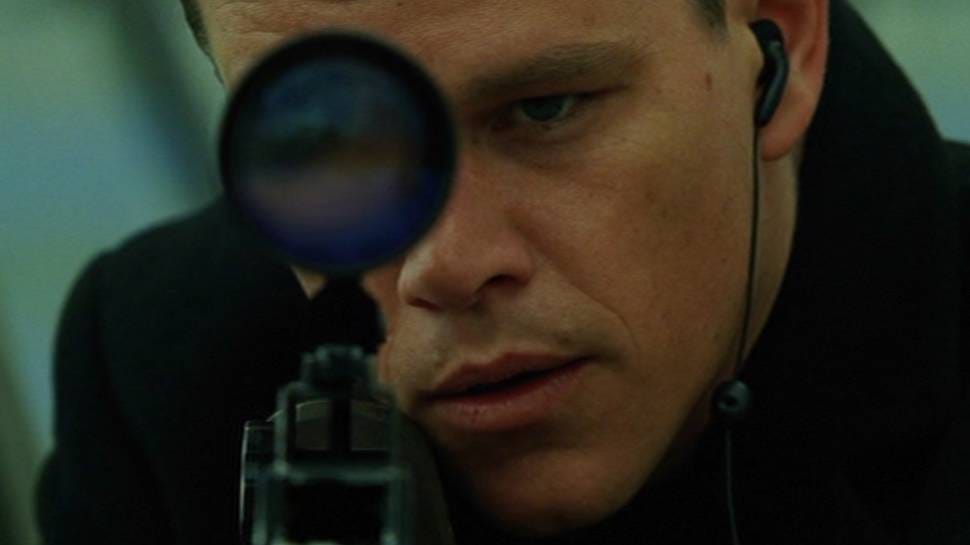
There’s a great video by Patrick Willems that captures how the Bourne movies had heralded in a level of blunt realism that was quite unlike the then-escapist standards of spy movies. It’s why the Daniel Craig-era Bond reboot kickstarted with the gritty, no-holds-barred Casino Royale. It was also, much like Bourne, international, and it involves a financier of illegal activities who would likely need the shadow banking infrastructure as well, though the movie doesn’t go as deep into the workings of it all like Tenet.
Tenet was also clearly written with some current-day geopolitics in mind. The movie opens with an immaculate set piece in an opera house in Kiev, where you see Russian terrorists hijacking the show and holding up the audience, and a Ukrainian SWAT team responding to it immediately. Who’s who is pretty confusing to not just us but also the Protagonist himself. But the (initial) understanding is that the hostage crisis is really a decoy planned by our Russian billionaire to steal some nukes. He has presumably used his network to get some Chechen militants to put up the smoke and mirrors and install some of his own men in the police to do the actual job.
Two years after the release of Tenet, Russia invaded Ukraine. It’s not much of a bold statement, but taken with everything else, it understands our current predicaments better than most other movies. This scene was also inspired by an actual hostage crisis in a Moscow theater in 2002.
One might argue that at the end of the day, Tenet is just using the same-old “American good, Russian bad” framing that has plagued past spy flicks. One could also say that, given how much Russia’s encroachment has put Europe on edge, Tenet is just an expression of the existential fear of a British guy.
I can't say I agree. For one, it was just after Tenet that Oppenheimer was made, and Nolan had little trouble putting American power on trial. And secondly, we have mounting real-life evidence behind the Sator character, from his presence in London to his dedication to freeports. Beyond the protagonist being ex-CIA and the antagonist being Russian, it's clear that nation-states have become an afterthought for the battle being fought above that realm.
You might ask: why am I not comparing Tenet with other movies that have similar “international” organizations? The Kingsman franchise would fall in the same vein. But Kingsman has little interest in capturing the essence of what this means. It plies its trade in being cartoonish and the first instalment does that very entertainingly. I did have hopes from Guy Ritchie’s slick adaptation of “The Man from U.N.C.L.E”, but we’re yet to see a sequel.
One movie that deals with geopolitics extremely well is the George Clooney/Matt Damon-starrer Syriana, which is set in a harsh world that's exactly like ours. Instead of time, Syriana uses oil to expose the criss-cross of alliances and deceptions between nation-states and oil dynasties. But again, a world like that can confuse you easily, and that was the median reaction of many moviegoers.
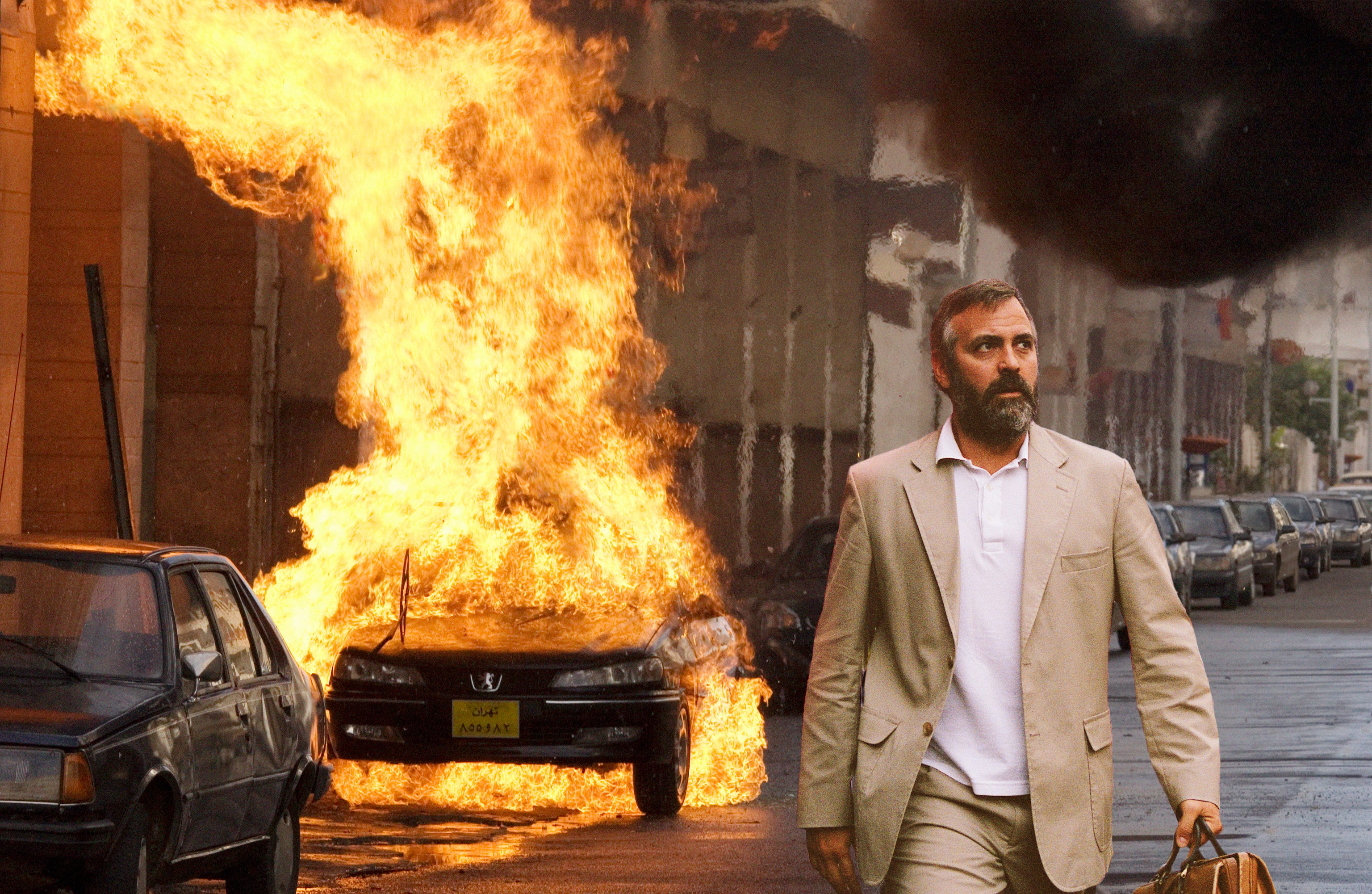
Tenet’s central achievement is enmeshing the new shape of intelligence with a high-tech concept like time inversion into something more coherent. And Tenet’s execution of this fusion is more fulfilling than Inception’s take on dream-sharing technology, even if it’s worse off in most other aspects.
Apologia
Now that you know why I find Tenet so fun, I should also do my due diligence to address its biggest drawbacks.
The first one is that you don’t feel for anybody. There are no emotional stakes. This, I won’t deny, is what I felt for the first time I watched Tenet. That’s also amplified by the so-called “wooden” acting of some of the actors, particularly John David Washington. All you know is that the world has to be saved from a threat worse than nuclear armageddon. The usual.
But I have changed my mind a little since then. Part of the reason you don’t feel much emotion in the movie is because none of the characters have any incentives to reveal their cards to anyone.
You have geopolitics, a crazed-out billionaire masking his activity under the garb of geopolitics, and our Protagonist who doesn’t know who exactly he’s dealing with for a long time. You can’t afford to get too close to anyone until you know you have a good chance of getting a straight flush. To a degree, this may be a screenplay choice, evident from the most common adage in the movie:
“We live in a twilight world, and there are no friends at dusk”.
I will say that this is not a strong-enough excuse to not get the audience to care for a movie’s characters, and Nolan could have made improvements. For instance, Sator’s wife Kat (played by Elizabeth Debicki) is a key character in the story who also doesn’t fall prey as a dead wife to someone else. But her arc is still a tad bit weak.
That being said, I’d also argue that we do end up caring for the two people that matter most in the movie.
I won’t spoil here, but there are plenty of YouTube comments on how Tenet’s ending got people really emotional about the friendship that had been building up between the Protagonist and Neil. By the end, both of them had been through a lot together, even if they didn’t know each other at the start. What seemed like a lack of warmth in their dynamic existed because Neil kept things from our Protagonist, but he did so only because there was a right time to tell him everything, and any other time before that would have been disastrous for their mission.
This was a friendship that literally traveled through time. We’re just mostly used to seeing that happen linearly.
The second drawback is what many consider Nolan’s most notorious sin: an excess of exposition.
In his headier movies, Nolan often suffers from over-explaining concepts or the rules of execution. This is what lets Interstellar down the most.
To be fair, high concepts from science (like five-dimensional realities) can be hard to wrap your head around, so it isn’t necessarily always bad. Lots of exposition can also be done well. Inception is a textbook example of that, especially since it also uses the exposition to delve into character motivations. So is Memento, which I consider one of Nolan’s cleanest movies still.
With Tenet, though, exposition is everywhere. You heard the same points hammered out at least 3 times each to you. No other movie in Nolan’s filmography has seen this much hand-holding.
You could say that the exposition in a Nolan flick is directly proportional to the complexity of the concept underlying the movie. The characters keep explaining the inversion mechanics to each other, and that amount of dialogue definitely takes away space elsewhere. This is despite Nolan’s stated intention of having the audience feel the movie rather than trying to make head-and-tail of it.
All true. But I have a slightly different interpretation of why it occurs so often in Tenet.
Throughout the movie, the Protagonist remains as much in the dark as the viewer. You unravel more of the world only as he does. He can’t internalize the rules of the game until he's played it. Which is why the more experienced players feel the need to keep reminding the Protagonist that, hey, this is how it works. That's the same as your parents trying to drill a point in you all the time because you don't learn until you make the mistake.
Plus, when you look at the praise that fans of Tenet heap on it, you see that he did achieve the goal of feeling it instead of trying to understand it. It’s why if you enter the words “I Can’t Stop Watching Tenet”, you’ll find at least two thinkpieces and one video essay with those words. And I find common cause with them, because no other movie I’ve seen this year has occupied my mind as much.


Last, but not the least: the sound design. This is perhaps the most indefensible of them all, which is really striking considering most of Nolan’s movies are excellent at this one element.
Yet again, Interstellar proves informative. There’s an interview where Nolan really took out the time to explain why the movie sounds the way it does in key scenes. More or less, it boils down to this:
“I don’t agree with the idea that you can only achieve clarity through dialogue. Clarity of story, clarity of emotions — I try to achieve that in a very layered way using all the different things at my disposal — picture and sound.”
Tenet’s sound design was by no means a technical mistake. And in all fairness, the shit bangs on good speakers, just like Interstellar.
One of the biggest hero factors playing a role in that is Tenet’s soundtrack. Hans Zimmer had skipped Tenet because he was working on Dune, a fantastic soundtrack itself. But Ludwig Goransson swung a mere audition into what I think is one of the freshest, most original movie soundtracks of the last decade, and my favorite in a Nolan movie since Inception. It was a fresh update over Zimmer’s pristine arrangements. Goransson’s compositions were dirty, sweaty, beastly, all the things a dancefloor appreciates. And dare I say, Travis Scott and Christopher Nolan make for a very interesting collaboration because The Plan is a great theme song.
Yet, I’m not sure how I feel about muffled dialogue. Yes, the soundtrack does the job of elevating emotions the way Nolan intended. But I’d like to hear people speak. If we’ve established that the world of Tenet can be a cold-hearted one where there’s little space for being sentimental, I’d at least like the dialogue to be coherent. At least with Interstellar, the sentiment was achieved without the lines being fully heard.
Just The Beginning
There’s a line in Tenet where you get to see the beginnings of Nolan thinking about his future career moves. Time inversion is a technology invented by a scientist from the future, and Priya compares her to J Robert Oppenheimer.
“As they approached the first atomic test, Oppenheimer became concerned that the detonation might produce a chain reaction, engulfing the world. They went ahead anyway and got lucky.
Think of our scientist as her generation’s Oppenheimer. She devises a method for inverting the world, but becomes convinced that by destroying us, they’re destroying themselves. The grandfather paradox. But, unlike Oppenheimer, she rebels, splitting the algorithm into nine sections and hiding them the best place she can think of. The past. Here, now.”
It is, on the surface, somewhat unlikely to think of Tenet as the origin story for Oppenheimer. It is even more bewildering to think of Tenet as the potential basis for a moral exploration of men whose supposed “moments of brilliance” break a key social contract undergirding the world. But that’s pretty much what The Odyssey is. Would you believe it, some have called all three movies an unofficial apocalyptic trilogy.
Tenet is more optimistic than either movie in many ways. At its core, it’s about two friends trying to save the world from a time-bomb that no one can see, hear or smell. It is about the power of friendship that helps beat a bad guy who’s really good at being bad, and all the cool action this involves. You can forget all of this heady nonsense and just judge Tenet by how gorgeous the set pieces are.
But Tenet is also an inflection point in Nolan’s career because he’s actively thinking about how the world changes overnight under the whims of a few people. He’s not made up his mind about if power of any kind — whether financial, social, academic, political, or otherwise — is worth striving for. But there’s no doubt Christopher Nolan is thinking more about the real world, and the multitude of crises plaguing it, more than ever. We live in a twilight world.
Somehow, a movie that’s designed around the paradox of whether you’d ever be born if you went back in time to kill your grandfather also nailed what it had to say about our living, breathing present. But, hey, isn’t that how one makes frustrating movies that you can’t stop yourself from rewatching?
Gets better with every rewatch.. I'll see you at the beginning........