

“We are who we choose to be. Now choose!”
— Green Goblin from the first Sam Raimi Spider-Man
The last time I wrote a piece on one singular artist, I was announcing my displeasure at what Kanye West had become. This time around is quite the opposite.
An artist’s relationship with the fans is a complicated one, and in many cases, it's the fans that are the real dicks. When someone says that “the consumer is king”, I am compelled to argue otherwise. They're idiots, they can't separate their head from their ass, and they want their favorite artist to conform to their preset perceptions of that artist. They forget that what hooked them to said artist in the first place was a bold dash of creative risk, but they don’t want more of those.
It’s as the ever-chirpy, ultimate post-ironic wanker Noel Gallagher would say: fuck the customer.
What can the artist do once the consumers have boxed them in? Defy the logic of your fanbase and they call you ungrateful, reminding you that it was them who made you and them who have the power to break you. Try to follow a process of appeasement and you might realize that you don’t like how much more inauthentic you seem to get over time. Everyone knows that Radiohead hated “Creep”, and that Nirvana disliked “Smells Like Teen Spirit” so much that they purposefully butchered its live renditions.
In the age of algorithmic music consumption, this problem is even more pronounced. It’s not like the dominance of mass consumer music ever went away — we’ve had complaints of music being cookie-cutter before. But today, while the cost curve of even the rarest of finds has dropped by a ball, there has also been erasure of the human element behind music curation. Music can’t be treated like a commodity like toys or clothes, but it is, much to the detriment of the industry that itself caused this conundrum.
All this makes The Weeknd’s overwhelming success pretty jaw-dropping.
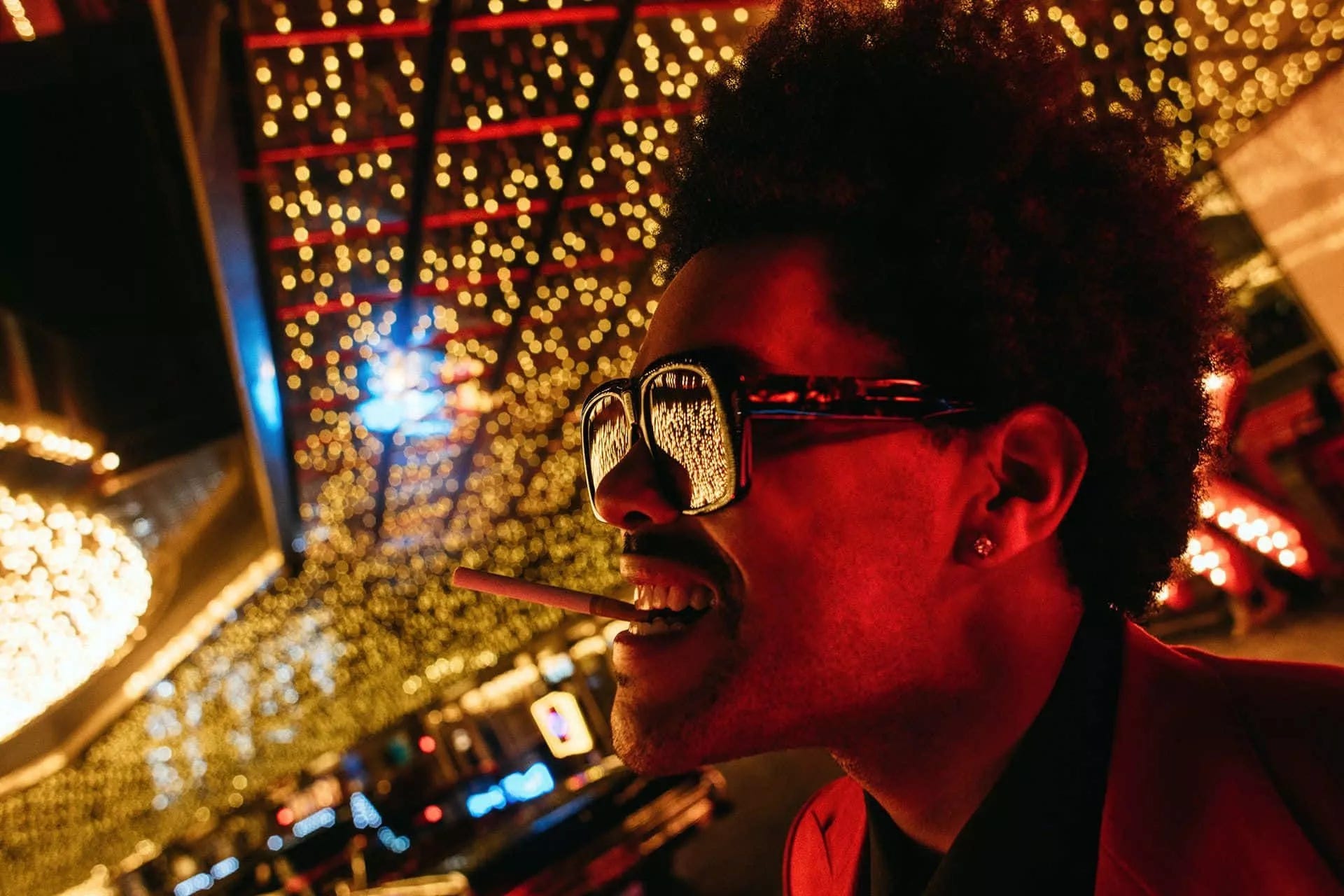
In the span of 14 years since 2011, Abel Tesfaye has told us a story of his wicked, depressed, fiendish alias through 3 mixtapes, 6 albums and 1 extended play. Using his own wild lifestyle as a late teen, he built a persona that we will be speaking about even when we’re 60 years old, encapsulating the ambitions, anxieties and dopamine rushes of an entire generation.
This was a deeply unlikeable character that we sometimes saw ourselves in and even empathized with, especially as he went through the trials and tribulations of having a fandom. All the while becoming the biggest act of the streaming era and successfully saying a tearful goodbye to his dark past.
There is no final aim with this piece. I’m not here to convince you of his stature. But I want to take a small tour through the moments that tie his catalog together by answering three important questions.
This is accompanied with a DJ set based on his discography, also mixed by me. I would love for you to listen to it, preferably as you read. It’s on YouTube.
Only For Tonight
The first question that I’m forced to ask myself is: does The Weeknd understand what it is to love somebody?
If there’s anything that even the most unknowing listener knows, it’s that The Weeknd is the poster child of toxicity. He makes film score for those who live by the script of emotional detachment, deliberately refusing to stay too long with someone for fear of falling in love. He is what they call “fuckboy” music, though probably, his fandom doesn’t skew towards being male. As proof, just look at the audience of any concert of his on YouTube.
For a generation raised on the confluence of dating apps, hookup culture and situationship anxiety, The Weeknd gave melodic potency to our fears. His songs were designed to sound like they would numb you to any attempt to make you vulnerable, because you’d have no idea how to function if you started feeling.
In this context, the obvious answer to my question should be a flat “no”. But I’ve never really been satisfied with this answer. It’s too simplistic for someone who tells us through his music about the times he fell in love, even who he fell in love with, and what he did afterwards.
If you’re tuned into the mix, the first song on it is called “Love In The Sky”, where he falls in love with a stripper. This is from his debut full-length album, Kiss Land, a work that’s supposed to land you in dark, neon-lit lanes, reminiscent of Los Angeles from the Blade Runner universe. You might even be thinking of the scene in Blade Runner 2049 where Ryan Gosling looks at an advertisement of the robot model he owns at home — also who he makes love with.
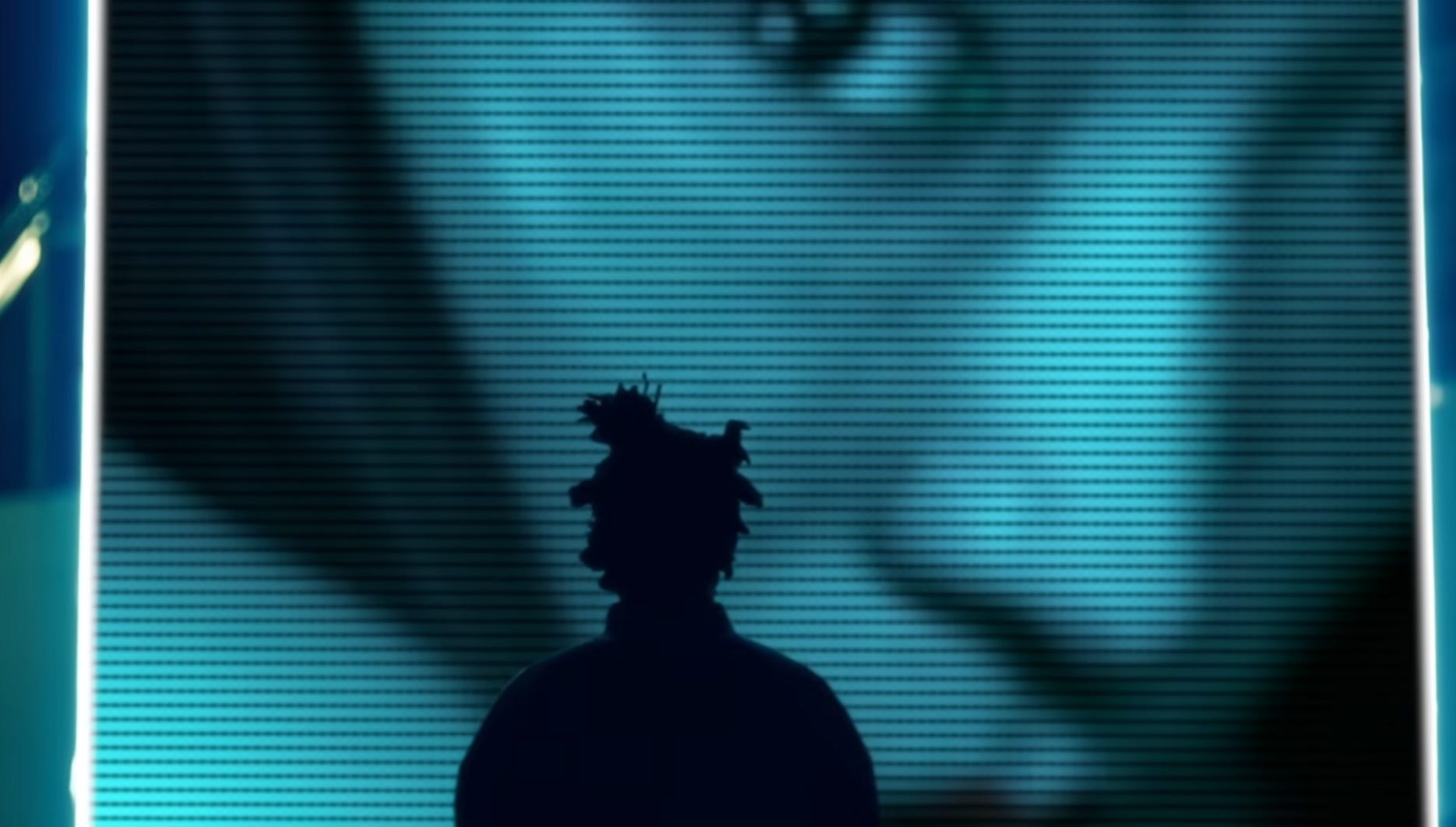
The video work for Kiss Land takes a lot from Tokyo nightlife. It stitches a collage of the more grotesque symbols of commodification associated with Japan — towering neon-lit brand hoardings, anime icons (perhaps some hentai also), the fast “salaryman” life, all existing with the urban alienation the country has known for years. These are also the elements that directly inspired the cyberpunk genre that Blade Runner resides in. Much of it (especially the explicit sex scenery) is really a vehicle for The Weeknd to give his thoughts on the music industry: we’ll come to this later.
Kiss Land came right after the three breakout mixtapes that he produced independently, now together called “Trilogy”, that propelled him to internet stardom. It heralded the birth of a whole new subgenre within R&B. It was an introduction to the unknown — no one knew who he was or where he came from. But in the Trilogy mixtapes, he cheats on someone, gets cheated on, swings between “having a life so fast it would put Wall Street bankers to shame” and craving stability, and has a recurring woman in his life named Valerie (track #17) who he’s only committed to every Thursday (track #11) because he’s too phobic to go beyond that.
This phase of his career was marked by dark. pulsating, industrial, cold-hearted beats that gave his cycle of misery a horror aesthetic. He warns his women not to fall in love with him because he could never tie himself to someone. When they don’t heed his advice and continue being with him, he tends to manipulate them into thinking that it’s their fault for not listening to him earlier. He portrays himself both as inevitable force and immovable object, with zero accountability for or agency over his own behavior.
On Wicked Games (track #2 of this set) while cheating on his partner, he asks a favor of his hookup:
“So tell me you love me
(Only for tonight, only for the night)”
A tale as old as the first man ever born.
Or on Adaptation (track #3), which is a bleak depiction of him “adapting” to his heartbreak by paying for sex:
“Now I'll never see your face
But it's okay, I adapted anyway
Adapted to these models
Who's adapted to the bottle
They take it down like water
Just to burn away their sorrows
I'll stay up ‘til tomorrow
Just to tear down all their morals”
Or how about House of Balloons / Glass Table Girls:
“She give me sex in a handbag
I get her wetter than a wet nap”
Yeah, exciting stuff. But not worse than what happened in The Idol.

It's easy to revel in this toxicity, which is made exciting with a whole new sound palette. But it's also easy to miss that as toxic as it is, his story has also been about whether we can change old habits.
There’s no doubt that there will always be pains and struggles in that process. Often, he makes dangerous impressions of what love even means. Like feeling jealous when his woman is with another man and defining love entirely in terms of envy. Or defining love as a potent drug, which he does all the time. He’s embarrassingly pulled all that in his quest for love. But he has also shown signs that he wants to have real connections.
One positive sign is his sonic evolution. The Weeknd’s foundation was his unique, dark R&B sound. While Trilogy was heavy on the drums and alternated between breakneck pace and steep come-downs, Kiss Land evoked a foggy city where everyone’s lonely. With Starboy came a notable shift, experimenting with hip-hop, trap, and electropop.
The latter trend becomes even stronger with his next 2 albums, After Hours and Dawn FM. It’s this trend that happens to coincide plenty with his evocations of love.
On “How Do I Make You Love Me” (track #6) from Dawn FM, the object of permanence is someone else. He’s not used to chasing someone so desperately, and for once the end goal of the chase is to achieve a relationship. It is a different matter that the album asks whether he is doomed to a purgatorial life. But the strong synth beep-boop sequences provide a colorfulness previously missing from his environment. It sounds nostalgic, which is not an emotion one would associate with someone like him.
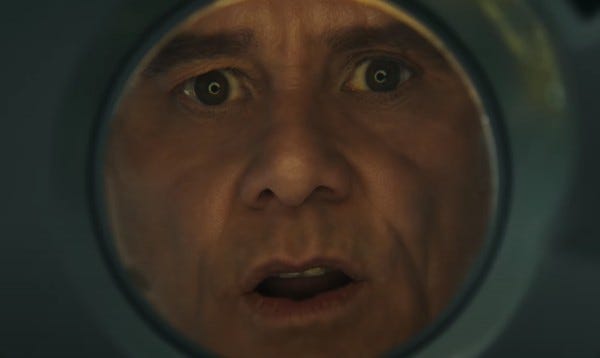
It helps that Dawn FM thematically borrows plenty of inspiration from the music of the 1980s as well as contemporary house artists like Swedish House Mafia, with whom The Weeknd has worked multiple times.
On the title track of After Hours, The Weeknd has realized the errors of his ways, and sings about them to the tune of a thumping bassline that midnights would be afraid of. He speaks of a former lover he wants back desperately, even wishes to have a family with her — a hitherto unexpected thing to hear from the world’s most famous hedonist crooner:
“Oh, baby, where are you now when I need you most?
I'd give it all just to hold you close
Sorry that I broke your heart, your heart”
On Hurry Up Tomorrow, one of the more romantic tracks on it happens to be a house track titled Open Hearts (track #7) — much like the song above. Here, he deals with the tug of war between love and emotional honesty much more properly than his earlier music, where he dismissed the relationship earlier. When he speaks of opening his heart to someone special in the hook, the somewhat muted-instrumental opens into blaring synthesizers, as if to give us an audial interpretation of what an “opening up” would sound like.
“Cover my scars, when I open my arms
It's never еasy falling in love again”
To add to that effect, its drums actually sound like a racing heart. The music video for Open Hearts also features a Weeknd who's in a speeding ambulance, tied to a bed with a defibrillator ready to pounce on him. It may also be worth considering that maybe, the song title borrows from the idea of an “open heart surgery”.
His nostalgia is accompanied by regret, which is something he never did in his earliest work. He laments losing his innocence too soon, and that he might not have enough time to undo his missteps. That’s why so much of the branding for Dawn FM shows an aged Weeknd. He is desperate to avoid the cliche of being an old, washed superstar who wasted his prime years on the most frivolous offerings of life. He’s afraid that his only recourse to that is asking for the grace of God, which only comes with death:
“So I see Heaven after life, I want Heaven when I die
I wanna change, I want the pain no more, hey”
Too Late to Save Our Souls, Babe
To a degree, then, we can say that The Weeknd does want to love, even if he doesn't succeed in doing so. But what you should also know is that in a lot of movies, love and sex are usually an allegory for another tale.
That brings us to the second question that anchors The Weeknd’s story: does he like show business?
When Abel Tesfaye made the Trilogy mixtapes, he was barely 20, far away from prefrontal cortex development, singing about sex, heroin, and sex with heroin. When he found an audience breaking the dam for him, one could imagine him to indeed be happy, but probably also mortified that what he’ll now be known for boils down to little beyond narcissism-fueled debauchery.
Label interest for his debut album came knocking. The Weeknd was touring the world now, and during his travels, his mind wrestled with the implications of his newfound fame. From those thoughts were born Kiss Land, his debut, and later, Beauty Behind The Madness: the album that would propel him to Michael Jackson-level stardom.
Take Professional on Kiss Land, where the hook goes:
“You're professional
Won't treat it like it's personal
No, 'cause it's just love
It always makes its way back around
It's dispensable
To fall is unacceptable”
On one hand, he could be saying this to a woman, perhaps a prostitute, given that that's what Kiss Land is about. That it’s just love that only needs to last a night. And then you move on to the next model to conquer.
But there’s another interpretation of this that’s common. In a way, it seems like he’s talking to himself. That he’s the professional who doesn’t need to take this audience love that seriously. That being a popular musician is a job like any other: you record, perform live, do some crowd work, sign autographs, and then do nothing but fuck off to sleep. But these lyrics also signal the doubts fomenting in his head about whether he can truly be that removed from this life.
On Adaptation itself, he tells us how he gave someone up for the cheap thrill of popularity:
“I made a trade
Gave away our days
For a little fame
Now I'll never see your face
But it's okay, I adapted anyway”
His newfound fame has come with infatuation that doesn’t translate into any meaningful personal bond. But it buys him time (and money to pay for sex) until he’s forced to reckon with himself.
All of this makes The Weeknd only the newest addition to an honored, historical tradition, spanning from David Bowie to Lady Gaga, that knows to treat fame as a drug that consumes you whole like no other. It’s the motherfucking “666” demon. It’s Kronos that ate his own sons. It’s Rosemary’s Baby.
By the way, The Weeknd happens to love horror movies. The creepy-crawlies, both of mind and body, make for an excellent vehicle to talk about the pitfalls of celebrity.
We’ve all heard The Hills and Can’t Feel My Face, two of the most popular songs of this generation, both part of Beauty Behind The Madness. If you’ve seen their music videos, you might recall that in Can’t Feel My Face, he sings his song in a club where no one is paying attention to him. However, that changes the moment a weirdly-pale old man flicks a lighter at him, and he starts dancing like MJ while also burning.
This pale man becomes a recurring motif in the music videos of other songs in the album. He’s there to nudge The Weeknd into eating the forbidden fruit everywhere, lulling him in with women, drinks, drugs. And then, in The Hills, when his car crashes and he tries to escape the accident scene, he ends up at a lush but dingy-looking house. There, lo and behold, with two bare-naked women beside him, that same man sits in the bask of the most evil neon red light, holding an apple — the forbidden fruit.
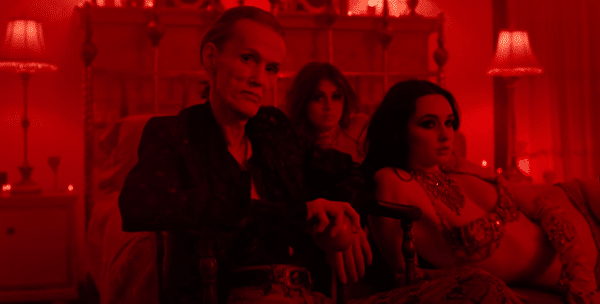
At the peak of his popularity, The Weeknd gave us a long-drawn, scary allegory for selling out. The man holding the apple could represent anything: money, fame, a record deal, the rollercoaster conduct that comes without the feeling of having control over one’s artistic direction. Most obviously, The Hills is named after the revered horror franchise “The Hills Have Eyes”.
Five years after Beauty Behind The Madness, Abel Tesfaye took out “Too Late” as part of After Hours. Its music video starts with The Weeknd’s severed head that lands somewhere near Beverly Hills after a lot of shit going down. Two white LA women with post-plastic surgery bandages all across their face, seemingly find the head. But instead of having a sense of urgency about it, they….play with it, worship it, kiss it passionately.
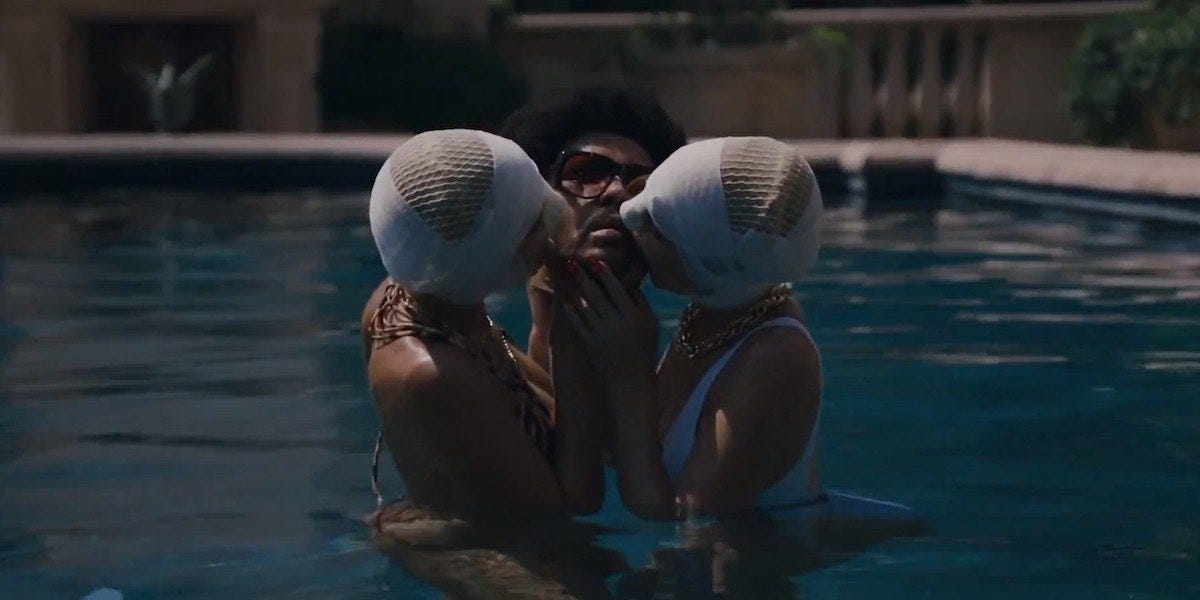
Then, they call an aspiring male model — who eerily shares similar bodily conditions as our headless horse — to show off his literal body of work. While he’s flaunting his abs, one of the women sneaks up behind him, decapitates him, and then The Weeknd’s head is transplanted onto this man. Then, to this new creature, they do some unspeakable, necrophiliac stuff.
The Weeknd remains unfulfilled by the singular fact that no one saw through his loneliness and just danced along to what they thought were just a bunch of bouncy pop songs by a talented black man. Whether he burns whole dancing or is behaded doesn’t matter to them. Just his swooning, moonwalking persona, his iconic hair, and his voice, all to be milked at any cost.
“We're in hell, it's disguised as a paradise with flashing lights
I just wanna believe there's so much more”
If that sounds familiar, it’s somewhat the plot of “Get Out”, where a white family turns their fetish over the physical attributes of black men into a wet dream for their eugenic ambitions. “I want his body”, “I want his eyes”, “I want his physique genes”.
In general, there’s a history of labels trying to shortchange jazz and blues musicians over rights, royalties, and their own agency. The rise of hip-hop, of course, accompanied a scary level of cultural appropriation that was enacted in the labels’ benefit. Whitney Houston’s label had cleaned up her poverty-ridden past to present an image of innocence.
And while it probably didn't happen to The Weeknd as seriously, he saw an industry wanting to maintain his enigmatic image for their own gain.
Silence of the Lambo
In the wake of what we know now, how should we even look at Abel Tesfaye’s success?
Unlike the last two questions, I've found this one easiest to answer as his career progressed. Abel Tesfaye’s outsized success is absolutely unprecedented, and it should put any major label to shame. And undoubtedly, it stems from the evolution of his music, and the decision to have the Weeknd alter ego meet its fate.
The anchor of this success is not the numbers themselves. If that were the be-all-end-all, we would put Drake — who The Weeknd himself has a long, bitter history with — in consideration. It's that Abel Tesfaye achieved them by ensuring his music evolved, and along with it, so did the relationship with his fans. After all, part of his disdain for show business comes from his fans’ expectations of him.
In late 2016, The Weeknd gave us Starboy, which heralded a reinvention of him. The music video for the title track saw him killing his past self.
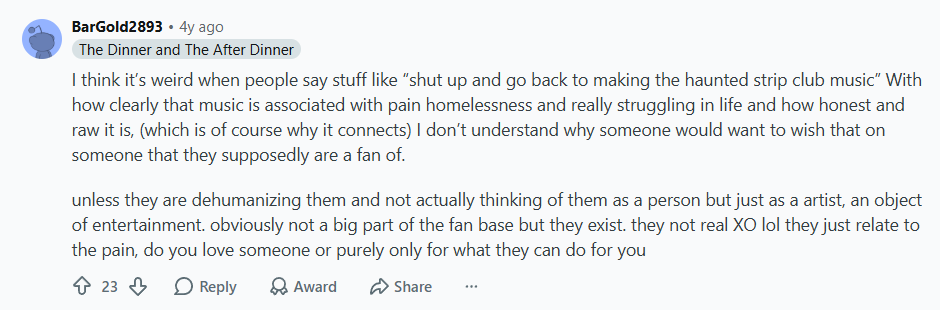
This was around the same time that listeners began clamoring for the old him. They explicitly wanted the Trilogy-era drugged-out Weeknd back. “Ah, those were the days.” They didn’t want him talking about his tough life growing up homeless, like he does on Sidewalks from the album. They didn’t want him trying out new sounds.

As unique as the Trilogy era was, it offered no redemption to anyone, especially its creator. Would you really like more albums of just that kind of toxicity and negativity, which were also made during one of the most difficult times in his life?
Between 2013 and 2016, Roger Federer was struggling with his game. In an era of tennis that saw more players play hardcore defense from the baseline, and fewer players come to the net, Federer, the best attacking player in the history of the sport, had some hard choices to make. The only way he could beat the incredibly-athletic, baseline-heavy pushers like Nadal and Djokovic was to experiment.
He changed his racquet. He changed his well-known strategy of trying to close a point quickly, instead keeping more of a rally. He worked on his backhand, which had long been a sore spot. It’s what he did those years, and it showed in the shots he was flailing to make. And he suffered some bad injuries in between.
Until 2017.
It was the year neo-Federer, with his neo-backhand, took over the tour, winning two slams. It’s the version of him that Nadal has called the most challenging to play against.
Starboy was the start of The Weeknd switching tack similarly. It’s hardly his best album, but it sowed some very promising seeds. It had some all-time bangers, like Sidewalks, I Feel It Coming and Party Monster. He worked with Kendrick Lamar, Daft Punk, Lana Del Rey, Benny Blanco, and Diplo. It was his first attempt at finding out how he wanted to write his story. It was the start of his reach for that elusive second peak, just a few months after Federer had reached his.
Of course, old habits die hard. In 2018, in the wake of his devastating breakups with Selena Gomez and then Bella Hadid after her, The Weeknd took out My Dear Melancholy. It was hailed by Travis Scott as a return to his Trilogy days. It’s also my least favorite work of his.
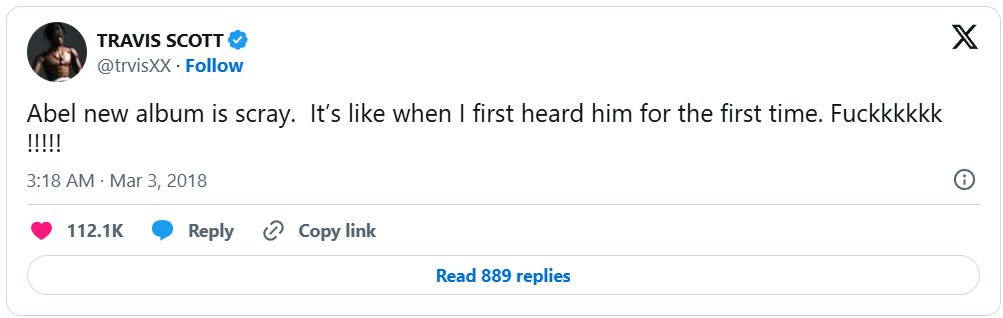
But on this album, there were not just glimpses of adventure, but also, surprisingly, of emotional openness. Take Wasted Times, a track produced by Skrillex, with the lyrics dedicated specifically to Hadid. The production is great, while the lyrics are a little more than corny. But I guess it’s the intention that matters:
“These girls only want you when you're winnin' (Winnin')
But you've been with me from the beginnin' (Ooh, yeah, yeah)
And I know right now that we're not talkin' (Not talkin')
I hope you know this dick is still an option”
Two years after this, just as CoVID began, Abel Tesfaye hit a blindingly-fast backhand of his own that was, quite literally, heard around the world.
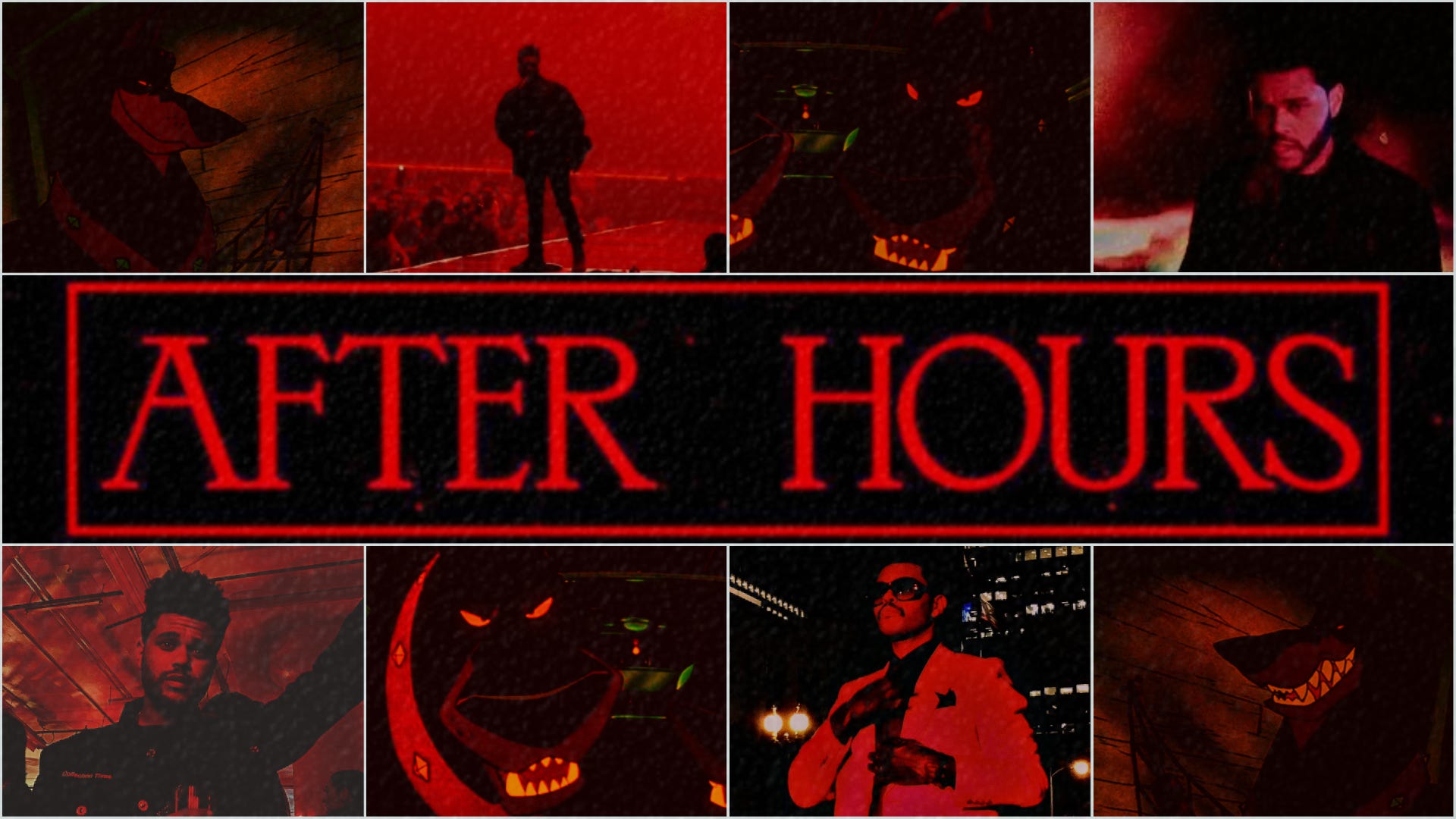
If the reports (and your Spotify playlists) are to be believed, the music album is dead. But when one of the biggest popstars puts out a cinematic experience in MP3 (FLAC for Apple Music users), how do you evaluate that belief? Yes, musicians make lesser albums these days and optimize for singles more. But not many of your favorites take that idea very seriously. In April 2020, The Weeknd took out his most substantial, and somehow, also his most commercially-successful album: After Hours.
During the parade period of the album release, The Weeknd dressed up in a red suit, had shades on, got his hair done, and wore elaborate makeup to look like he had gone through a night of beating and getting beaten up. His music videos for the album told a story of this man, in his new digs, speeding through LA, just like Adam Sandler in Uncut Gems trying to survive New York while also trying to conquer it.
It’s no coincidence that one of the men trying to beat Sandler’s character up in the movie was, well, The Weeknd himself.
Uncut Gems is one of the many movies that inspired After Hours. There’s also the titular After Hours movie by Martin Scoresese, which is about an office worker who experiences one travesty after another on his way back home. You also have Scorsese’s Casino, Fear and Loathing in Las Vegas, and many other movies that contributed to the hazy, intoxicating, adrenaline-fueled buzz of the album.
After Hours is more dreamy than drugged-out, though. In Trilogy, there is a sense of gleeful abandon, whereas here, it’s looking inward and lamenting choices all the way. That's not a state a longtime fan of The Weeknd would be used to. The album is a yearning for better times, a wish to not be alone anymore.
The fog of mystery that The Weeknd shrouded himself in became harder to keep up the more popular he got. Perhaps, that’s why, in a rare pattern break, but also the first of many more to come, he begins telling us more about his real life, too. In Faith (track #29), for instance, he says:
“I ended up in the back of a flashing car
With the city shining on my face
The lights are blinding me again”
In 2015, Abel Tesfaye did, in fact, get arrested in Vegas because of a brawl he was involved in. In an interview with Variety, he admitted to using this experience to inform this song, and broadly, this album.
Even if the album sounds like a high-octane chase, it’s what he’s chasing that matters most: spoiler-alert, it’s not sex. Take the hit track Heartless, where, in the middle of “pussy falling out the pocket”, he also expresses longing for someone special:
I thought I lost you this time
You just came back in my life
You never gave up on me (Why don't you?)
I'll never know what you see (Why won't you?)
I don't do well when alone (Oh yeah)
You hear it clear in my tone
After Hours was a self-destructive album alright, but it’s distinct from the self-pity and lack of accountability present in his past work. For once, he allows himself to feel guilt, tries to deal with his trauma for once, and even begins to consider the mere possibility of a having a happy life. Trilogy would have merely ended at rinsing and repeating the self-destruction.
It was an attempt to unchain himself from his rockstar lifestyle, even repair old relationships, if possible. Seemingly, many of his fans didn’t want that. But this was the start of a very serious dialogue with them that would only get more direct with his next two albums.
Saw My Life With You
After Hours was followed by Dawn FM and Hurry Up Tomorrow, and together, they make up a “Divine” Trilogy that charts The Weeknd’s journey from hell through purgatory to heaven. I won’t be getting into the details of this journey, but it does tell you one key fact: The Weeknd has chosen to die.
There’s no murderer, though. Part of the choice is a natural consequence of hedonism. Part of it could be, as is worryingly seen in After Hours, suicidal ideation in the absence of your life having any meaning.
But The Weeknd is an alias. He’s a character played by a real person, who does not want to share all the behaviors of his creation anymore. Sure, fiction is often a representation of your subconscious, which is influenced by reality. But this trilogy makes it clear that Abel Tesfaye wants to move on from The Weeknd.
This doesn’t necessarily mean he doesn’t want to make music. But it is akin to what Jon Hamm felt like about “Mad Men”. For 7 straight fucking years, Jon Hamm played Don Draper: a bottomless pit, an alcoholic philanderer, who’s also incredibly talented at advertising. More closely, you have David Bowie, who abruptly retired his iconic, but drug-and-fame-addled Ziggy Stardust alias, which Bowie only started because he was struggling to break through as himself. It is also worth noting that Starboy was, in name, a deliberate hat-tip to Bowie’s Starman.
Both Hamm and Bowie still wanted to perform, but not as the fronts they were best known for. Yet, in their fans’ eyes, there is no separation between them until they truly call it quits. This took a toll on them — Jon Hamm even had to get help for an alcohol addiction.
In an interview, The Weeknd once said that great art doesn't come without great pain — at least, that's what the industry demands. “They want your sadness”, he says. That's how disturbingly mythologised its place in general discourse has become. What makes it less effective is that sooner or later, art that repeats itself on the same lines also stops being great. A problem he definitely wanted to avoid.
On Hurry Up Tomorrow, the track Baptized in Fear is a story of The Weeknd drowning in the tub because of sleep paralysis. This takes from a real incident that Abel himself suffered through, almost passing out. If that reminds you of BoJack Horseman, that’s very likely deliberate: the album also has a song called The View From Halfway Down, which is also the title of the bleak penultimate episode of the show. Someone on YouTube actually made an edit fusing Heartless with clips of BoJack: pretty sick, and perfectly in sync.
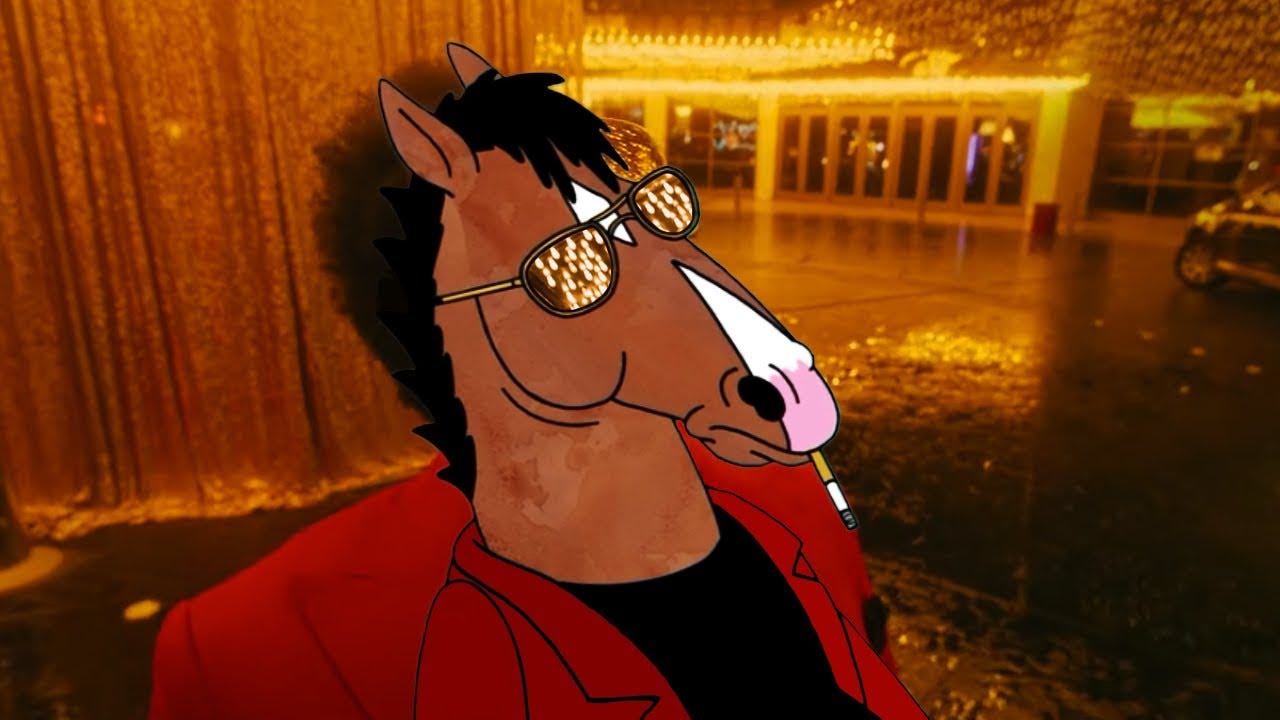
This is also the part of his career where he most seriously tries to understand love: the very first question we addressed on here. He begins to look for advice for his predicament. Take “A Tale By Quincy”, where The Weeknd gets Quincy Jones, the legendary producer of MJ’s biggest hits, to provide his two cents:
“I latеr had an evil stepmother who furthеr cemented the idea that I didn’t need a mother
Growing up without one had long lasting influence I didn’t fully understand until much later in life
It bled into my relationships with family and those I had become romantically involved with
Whenever I got too close to a woman, I would cut her off
Part of that was vindictive and partially based on fear
But it was also totally subconscious
Looking back is a bitch, isn’t it?”
It’s one of the most heartfelt moments in all of Abel Tesfaye’s discography. He gets a true pioneer, one who’s been through the same doom loop, and his response today is one of enlightenment. But this awakening didn’t come magically, or through some voodoo genie magic. It came by dealing with the demons he’d been drinking away for so long.
The Weeknd took Quincy’s advice on looking back seriously.
The most direct such engagement is in Red Terror from Hurry Up Tomorrow. It is unlike any other song in The Weeknd’s whole catalog for one simple reason: it is not sung from The Weeknd or Abel Tesfaye’s point of view. It’s that of his immigrant Ethiopian mother who raised him single-handedly.
As a resident in a poor Toronto suburb, Abel dropped out of school, couch-surfed all across the city, and then, to pursue a career in music, he ran away from home. He couldn’t face his mother until he made something out of himself, creating a tense relationship between them. But he repaired that as he got successful. Eventually, he put himself in her shoes in this song, imagining what her life was like as an Ethiopian who was trying to escape to Canada during one of the most violent periods in Ethiopia’s history, the eponymous Red Terror:
“Oh, you were never heavy, light just like a feather
I ran from the terror, the ground was red from the led
You were never scary, I knew you were special
My only intention, alone, I left to the west
Then moved to the city, eight months, we wеre pregnant
You came out so prеcious, in the snow, you would grow
Your mama loves you, you'll never be alone”
From never naming the women he had sex with, to now telling us about his mother for the first time, The Weeknd’s success has intersected with him becoming far more of an open book.
Hurry Up Tomorrow makes a fusion of every past version of him, and consequently, the styles of his past albums too. So, The Weeknd also uses that opportunity to take a while and breathe in his accomplishments. And while we know of his disdain for the false promise-land of Hollywood, he also sings of his time in LA, fondly remembering the career it gave him:
“Take me back to LA
Where the sun would kiss on my face
Now the sunshine tracks my skin
I stayed too long”
Not coincidentally, Hurry Up Tomorrow is also a direct conversation with us, the fans, about a future world where The Weeknd doesn’t exist. He does wrap it around a metaphorical conversation with a woman (duh), but it’s as direct as it can get on Cry For Me (track #5):
“And I hope you cry for me like I cry for you
Every night for you, take it easy on me, baby
'Cause I tried with you, saw my life with you
End of time with you, now we're strangers
And I hope that you still cry for me”
And in the same song, he admits that touring has taken a toll on him. In real life, he actually lost his voice midway in a live gig, which hugely influenced this album:
“The crowd'll scream
I block my ears to stop the cheers
'Cause the stage took a toll
Been faded on the floor”
A few songs later, on Reflections Laughing, he tells us that more often than not, to his detriment, he’s sacrificed himself for us:
“I'm trapped inside a gilded cage
A golden blade I'm sharpening
It pleases you, I'll see it through
I feel your chill across my skin”
Throughout the album he also feels the conflict between wanting to let go of the fans, and whether he can handle the loss of popularity that would entail — the final boss of toxic relationships. He regards us as the source of his well-being, and he fears that we’ll get over him. It’s why he hopes we’ll cry for him when it’s all said and done.
The music industry is replete with examples of those who overstayed their welcome. Drake. Eminem. Ed Sheeran. Lil Wayne. U2. They persist, unaware that the music landscape has done away with their kind. They self-inflict pain with their repeated attempts to stay relevant with music that everyone’s already had enough of. Nostalgia is really the refuge of the has-beens.
But mainstream music is defined by those who never fell into that trap. Lady Gaga, who set the carpets that Charli XCX and Dua Lipa now walk on, is still making banger albums. Skrillex became a darling of the electronic music world once he stepped out of brostep. Lana Del Rey, one of the most frequent collaborators of The Weeknd, graduated from the rose-tinted depictions of love she was known for.
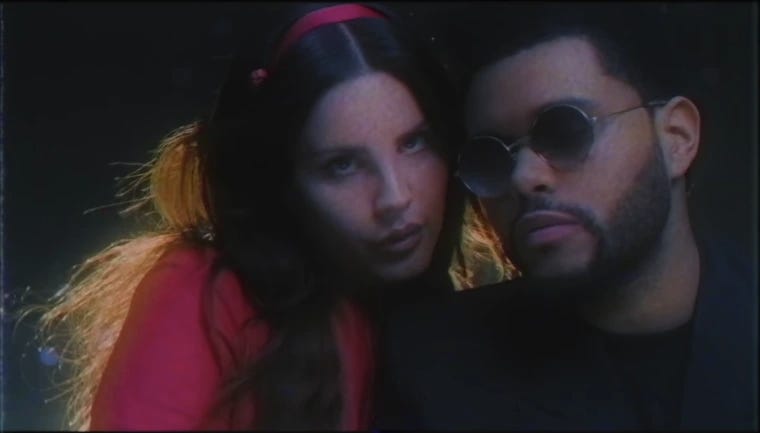
Make no mistake though: this is no template for success. Each of these artists came around to this conclusion through their own journeys. You can’t manufacture a feel-good comeback story with music marketing. It’s shaped by the artist’s circumstances more than an industrial plan. Everything else is post-hoc reasoning.
With Trilogy, Abel Tesfaye gave birth to a new soundscape within R&B and even hip-hop. It was defined by the life he lived. So was true of those who came after him: Brent Faiyaz, Bryson Tiller, Daniel Caesar; and those who inspired him directly: D’Angelo, Prince, Quincy Jones, and David Bowie. All of them enjoyed the adoration that came with their earliest hits, but paradoxically, that also created an uphill slope for them to climb. Would the legacy of these men always be defined by their fans, or the broader industry saying “I liked you when you were younger”?
D’Angelo, Prince, Quincy Jones and Bowie all knew what most struggle to accept even today: that the only acceptable outcome is ending it on a respectable, if not high, note.
We speak similarly of sportspersons. Roger Federer’s monster 2017 run when he was 35 — older than most of his tour. LeBron James’ post-injury second prime in 2020 with the Lakers. Dirk Nowitzki’s historic 2011 ring, which came just 4 years before he retired. Virat Kohli 2.0.
Abel Tesfaye’s second prime is in the numbers, yes. But more importantly, it’s in his re-definition of what good R&B, and lately, good pop should sound like. Incorporating global sounds like baile funk, actively taking elements from drum-and-bass on After Hours: genres that don’t see the light of day outside of clubs. Reinvigorating house and disco on Dawn FM to warn us against nostalgia. Putting in his Ethiopian roots in his drums and his lyrics.
By no means is he the only one doing all of this. But if we were to go by the precedent set by his peers, at the scale at which they operate, he shouldn’t have. Nobody would have been surprised if he didn’t do so — he would have been relegated to the annals of music history where the only value he served was a remembrance of a time gone by, and maybe some assured annual royalties for the labels that own back catalogs.
And I Hope You’ll Still Listen
I’d like to leave you with a tidbit.
There’s a scene in Whiplash where our beloved drummer Andrew Neiman is seated at dinner with his father and his uncle’s family. The uncle’s two sons, who are Andy’s age, are well-to-do in college. One aspires to play pro-football but is still just a college jock far away from NFL, and the other thinks that winning prizes at Model United Nations is an effective proxy for being good at the even-more bogus field of international relations.
The dinner table is discussing greatness. Neither son is at the most elite level of what they do yet. Andrew, though, is in the best music school in the country. But even at the drumming hall-of-fame, there’s only so much material gain. That is, at least, the attitude his family seems to exude, much to Andy’s chagrin. Andy retorts back by pointing out with acerbic honesty that the successes of the uncle’s sons aren’t all that.
That blows up the dinner table into a catfight. Andy’s father, who’s shocked at his son’s boorishness, scrutinizes Andy’s choice of role model — legendary jazz musician Charlie Parker, whose saxophone skills were only matched by his ability to take in copious amounts of heroin; it’s also why he died at the young age of 34. To this, Andy replies:
“I'd rather die drunk, broke at 34 and have people at a dinner table talk about me than live to be rich and sober at 90 and nobody remembered who I was.”
Conventional wisdom frames this as a gotcha moment in cinema history (although Andy’s dad countered against this very successfully). But in hindsight, Andy was wrong. They’re more likely to talk about how Charlie Parker’s personal life limited his potential, rather than his career itself. There is such a thing as bad publicity.
Naturally, at 20 years old, Andy Neiman and The Weeknd would be forgiven for not knowing better. But the music industry is one where the prefrontal cortex remains stuck even as people push 40. In that light, The Weeknd’s maturity curve is a miracle. There was every incentive for him to continue singing about the same old stuff. There was a pale man holding an apple at every corner. Fans always remain dumb.
But what’s poignant is that maybe, deep down, even as a youthful rowdy runner, The Weeknd knew this was a possibility, even if he didn’t internalize it fully until his 30s.
One of my favorite songs by him, and of all time by any artist, is Rolling Stone, from the original Trilogy. Much like the similarly-named Bob Dylan track, this one is also about a restless life without settlement — just a different kind of restless from Dylan. This was the first time that Abel Tesfaye talked to us about his ambitions to become an all-time great. In fact, the song was accompanied by a letter that spoon-fed fans the meaning of its music video.
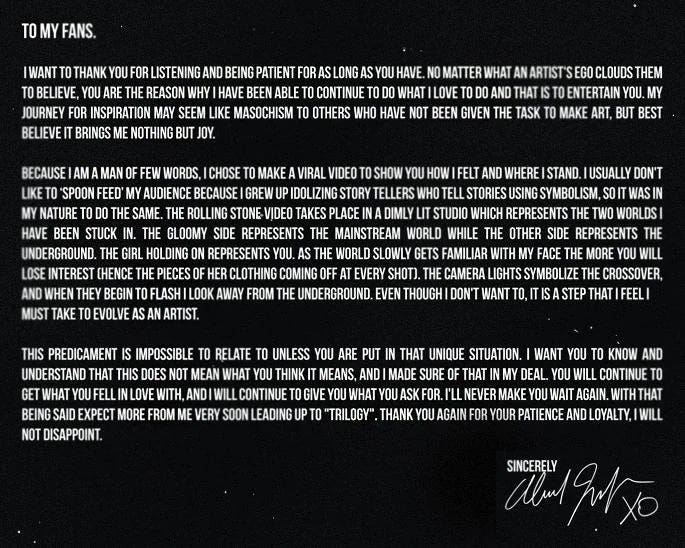
The song is him making sense of his rise from a homeless boy to being on top of the world. That transition, he admits, has left unresolved issues. He also knows the power his unique perception of music wields. And he knows that it could get to a point where the loss of the aura that surrounds him makes his fans lose interest in him.
So, he pleads with his fans, promising that he’ll stay true to his identity — not necessarily that of The Weeknd, but as an artist that constantly pushes boundaries no matter what the name. He hopes that, no matter how many years pass, we’ll still listen.
“So, baby, love me, oh
Before they all love me
Until you won't love me, oh
Because they'll all love me, ooh
I'll be different, oh
I think I'll be different, ooh
I hope I'm not different, oh
And I hope you'll still listen”
Well, thank fuck we did. He didn’t know either how he’d do it, but he certainly delivered on that promise. And I can’t help but permanently be in amazement of how good it was when it lasted, and that it ended perfectly.
We are who we choose to be. And I like to imagine Abel Tesfaye at peace these days.
(Just don’t do movies, please, you’re not good at this)
Quick note: a few video essays on The Weeknd really helped me put this essay into perspective. They go into far more detail about his catalog: if, like me, you’re insane, you’d love to watch them. This one by TennisThom is hella long, so is this one on his beginnings. This one’s pretty short.
If you’ve stuck around for this long: this is the first time I’ve fused two things I love doing into one cohesive piece of work. I’m really proud of it, but I was also frustrated for a while that it hadn’t gone anywhere. This story, and the set, together are more than 6 months late.
As for my long hiatus, I suppose I will delve into why in a later piece, because there’s no particularly concrete reason as such. But as always, I’m on Twitter, Instagram (@easymaniesniper for all the DJ mixes), LinkedIn, wherever you’d like to chat. It feels good to be back writing Hot Chips again, and I’ll be writing.
Really enjoyed this. I kept thinking about how success can become its own creative constraint. The bigger the audience, the harder it is to surprise them.
Amazing, i loved reading this, and it made me think so much. So glad it’s out in the world!!